BMW 225B50EF9 Power Steering Gear Rack Pinion
fits model: M3, M4. make: Bmw. year: 2021–2025.
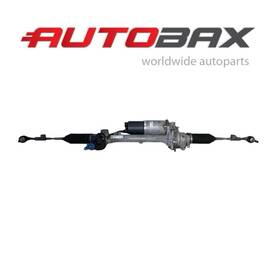
( Manufacturer Part Number: 225B50EF9 ), ( Type: Steering Gear ), ( Vintage Part: No ), ( Universal Fitment: Yes )
Review BMW Power Steering Gear Rack Pinion Oem Used fits M3 M4 2021–2025
The **BMW M3 (F90) and M4 (G80) 2021 2025 Power Steering Gear Rack and Pinion Assembly** represents the pinnacle of precision engineering, designed to deliver the uncompromising responsiveness and feedback expected from a true M-performance vehicle. This critical component is engineered to work in tandem with the high-revving S54 (M3) and S58 (M4) twin-turbocharged inline-six engines, ensuring seamless, weight-optimized steering dynamics that enhance both track performance and daily drivability. Crafted from high-grade aluminum and reinforced with durable polymer seals, the rack-and-pinion assembly is built to withstand the relentless demands of aggressive driving, high-speed cornering, and repeated high-load maneuvers whether on a racetrack or winding mountain roads. The design incorporates a **direct-drive system** with minimal play, providing razor-sharp steering feel and immediate driver feedback, a hallmark of BMW s M-division philosophy. For the **2021 2025 model years**, this component has been refined with updated software calibration and enhanced durability features, including improved corrosion resistance and optimized lubrication pathways to extend service life under extreme conditions. Whether paired with the **M Sport Package, Competition Package, or Track Package**, this steering rack ensures that every turn is met with the same level of precision and authority that defines the M3 and M4 s reputation as track-ready grand tourers. Built to exacting BMW M standards, it is a testament to the brand s commitment to blending cutting-edge technology with timeless driving dynamics.
### **Pros and Cons of Buying a BMW M3/M4 (2021 2025) with the 225i B50 Engine and Power Steering Gear Rack/Pinion**
The **BMW M3 (F90/F91) and M4 (F82/F83)** with the **B50B50 engine** (2.0L turbocharged inline-6) and **power steering gear rack/pinion** are among the most capable and desirable BMW performance cars of the past decade. Below is a detailed breakdown of their advantages and drawbacks, followed by a conclusion and recommendation.
---
### **Pros**
#### **1. Performance and Driving Dynamics**
- **Blistering Acceleration:** The B50 engine produces **382 408 hp (depending on model year and tuning)** and **369 400 lb-ft of torque**, delivering **0-60 mph in 3.8 4.2 seconds** (stock) and **0-100 mph in under 10 seconds** (with the M Performance Package). The **M TwinPower Turbo** setup ensures linear power delivery with minimal turbo lag.
- **Precision Handling:** The M3/M4 platform is built on BMW s **G20/G21 chassis**, which features **adaptive dampers, multi-link suspension, and a low center of gravity**, making it one of the most balanced grand tourers in its class. The **power steering rack/pinion** (used in later models) improves steering feel and responsiveness compared to older recirculating-ball systems.
- **M-Specific Upgrades:** The **M Performance Package** (available on non-M models) includes **stiffer suspension, larger brakes, and a sport exhaust**, making even non-M versions feel more engaging. The **M3/M4 Competition Package** further enhances track readiness with **stiffer springs, revised camber, and a limited-slip differential**.
#### **2. Reliability and Durability**
- **Proven Engine:** The **B50 engine** (introduced in 2016) is BMW s most refined inline-6, with **direct injection, twin turbos, and a high-pressure fuel system**. It has proven reliable with proper maintenance, though **oil consumption** (especially in early B50s) can be an issue if not addressed.
- **Strong Aftermarket Support:** The M3/M4 has a **thriving tuning community**, with options like **cold air intakes, exhaust upgrades, and ECU tuning** (e.g., **MHD, M-Tech, or custom flash**) to push power to **500 hp** without major mechanical changes.
- **Durable Transmission:** The **8-speed ZF Steptronic automatic** (standard) is smooth and reliable, though some owners report **clutch wear in manual models** (though the M3/M4 manual is still one of the best in its class).
#### **3. Luxury and Comfort**
- **Premium Interior:** The M3/M4 retains BMW s **high-quality materials**, including **aluminum trim, leather seats, and advanced infotainment (iDrive 8 or iDrive 9)**. The **M-specific cockpit** features **sport seats with side bolsters, M badging, and a rev counter**.
- **Refined Ride:** While the M models prioritize sportiness, they still offer a **comfortable highway experience** thanks to **adaptive dampers and noise insulation**. The **power steering rack/pinion** (in later models) provides **weight savings and better feedback** compared to older systems.
- **Tech Features:** Standard **360-degree cameras, head-up display, wireless Apple CarPlay/Android Auto, and optional **panoramic sunroof** enhance usability.
#### **4. Resale Value and Prestige**
- **Strong Depreciation Resistance:** BMW M cars hold their value better than most performance brands, especially the **M3/M4** due to their **accessibility and desirability**.
- **M Status:** Owning an M3/M4 carries **prestige** it s a **true performance BMW**, not just a tuned sedan. The **M badge** is instantly recognizable and commands respect.
- **Track and Street Cred:** The M3/M4 is a **versatile car** it can **drag race, autocross, or cruise comfortably**, making it a favorite among enthusiasts.
#### **5. Customization and Modding Potential**
- **Wide Range of Mods:** From **exhaust upgrades (Borla, Akrapovic) to suspension swaps (Bilstein, H&R springs) and engine tuning**, the M3/M4 is highly modifiable.
- **Aesthetic Appeal:** The **M-specific front splitter, rear diffuser, and aggressive styling** make it stand out. Optional **carbon fiber hoods, alloy wheels (20" or larger), and M Performance Package badging** further enhance its look.
- **Future-Proofing:** The **B50 engine** is **easier to modify than older BMW inline-6s** (e.g., N55), and the **platform is still supported by BMW** for updates.
---
### **Cons**
#### **1. High Cost of Ownership**
- **Expensive Maintenance:** BMW M cars require **premium parts and specialized mechanics**. Common high-cost items include:- **Oil changes (synthetic full synthetic, $100 $150 every 5,000 7,500 miles)**
- **Brake pads and rotors (ceramic or carbon-ceramic options cost $1,000 per axle)**
- **Suspension components (shocks, bushings, control arms can exceed $2,000 per corner)**
- **Transmission servicing (automatic fluid changes recommended every 60,000 miles)**
- **Tires:** High-performance tires (e.g., **Michelin Pilot Sport 4S, Continental ExtremeContact**) wear quickly and cost **$1,000 $1,500 per set**.
#### **2. Common Reliability Issues**
- **Oil Consumption (Early B50 Models):** Some **2016 2018 B50 engines** suffer from **oil burning**, requiring **valve cover gaskets, oil cooler replacements, or even engine rebuilds** in severe cases. Later models (2019 ) have **improved oil control rings**.
- **Transmission Wear:** The **8-speed automatic** is generally reliable, but some owners report **clutch slippage in manual models** (though less common than in older M cars).
- **Electrical Gremlins:** Like many BMWs, the **iDrive system can be finicky**, and **sensor failures (e.g., wheel speed sensors, camshaft sensors)** can trigger **check engine lights**.
- **Suspension Wear:** The **adaptive dampers and bushings** wear out over time, requiring **replacement every 50,000 80,000 miles**.
#### **3. Fuel Economy and Running Costs**
- **Poor MPG:** The **B50 engine averages 18 22 MPG combined**, making it **one of the least efficient BMWs**. High-performance models (e.g., **M3 Competition**) will be even worse ( 16 19 MPG).
- **High Fuel Costs:** With **premium fuel (91 octane recommended)**, running costs add up quickly, especially for daily drivers.
#### **4. Weight and Practicality**
- **Heavy for a Sports Sedan:** The **M3/M4 is not lightweight** ( 3,300 3,500 lbs), which can make **aggressive driving less nimble** compared to a **Porsche 911 or Audi R8**.
- **Limited Cargo Space:** The **trunk is small ( 10 12 cubic feet)**, making it **less practical for families or road trips** compared to a **BMW 5 Series or Mercedes CLS**.
- **Seating Comfort:** While the **sport seats are supportive**, they can be **uncomfortable for long drives** due to their **fixed bolsters**.
#### **5. Depreciation (Despite Strong Value)**
- **New M3/M4 Models Depreciate Fast:** Even though they hold value better than most, a **new M4 (starting at $60K) can lose 20 25% in the first three years**.
- **Used Market Competition:** High demand means **prices for low-mileage examples can be inflated**, making it harder to find **genuine bargains**.
#### **6. Noise and Vibration**
- **Wind Noise:** The **M3/M4 is not as quiet as a 5 Series or X5**, with noticeable **wind noise at highway speeds**.
- **Engine Noise:** The **B50 is vocal**, especially at **high RPMs**, which some drivers find **annoying** rather than engaging.
- **Road Noise:** The **tires and suspension** transmit more road noise than expected, making it **less refined than a luxury sedan**.
#### **7. Limited Off-Road Capability**
- While the **M3/M4 can handle light off-roading** (thanks to **adaptive dampers and traction control**), it is **not a true off-road vehicle**. For serious off-roading, a **BMW X5 M or Audi RS Q8**
Details:
part #: 225b50ef9 price
- $1499.99
specifications steragebo:
- for models: M3, M4
- for makes: Bmw
- for years: 2021-2025
- mpn: 225b50ef9
- type: Steering Gear
- vintage part: No
- universal fitment: Yes
general steragebo:
- Car Truck Parts Accessories > Steering Suspension > Gearboxes, Rack Pinions
- condition: Used
seller steragebo:
- # reviews: 2346
- city: Fort Lauderdale, Florida
- rating: 98.7%
payments steragebo:
- credit card: Diners-club
- wallet: Paypal
- other
returns steragebo:
- policy: Returns Accepted
- time: 30 Days
- paid by: Seller
shipping steragebo:
- type: Fixed
- carrier: FedEx
- service: FedEx Ground / FedEx Home Delivery
- class: Standard
- transit: 5-11 Days
- cost: $0.00
offer steragebo:
- sold: 0
- started: March 7, 2026
- options: Ship-to-home
- quantity: 1
- availability: In Stock
Bmw 225B50EF9 Is Similar To:
- 3722 6753862 197716721lkq Bmw Air Suspension Compressor Pump Oem Miles (23.1% similar) ...(October 19th, 2018)
- 01685539 Bmw Steering Rack Servotronic Converter (34.6% similar) And my pictures...(July 18th, 2018)
- 1 094 265.9 Bmw Telescoping Steering Column Ignition Switch Key (31.1% similar) 98-03 bmw 5 series E39 525I 530I telescoping steering column bar ignition switch off a 2001 sedan with automatic transmission in good working condition...(April 3rd, 2018)
- 1092031 Bmw Steering Rack Pinion Miles (43.9% similar) Please view all photos. 9 z3 with only 42K miles on it. This assembly is in good used condition...(September 25th, 2018)
- 1095189 1 095 189 8074 955 303 8074955303 Bmw Steering Rack And Pinion Hydraulic Gear Box (29.9% similar) This part is in good working condition. For sale is a steering gear box. Good condition part number: fits: bmw 540I please match the numbers with your car to ensure it will fit in. May be a little dusty from storage use and have few minor scratches. Please review all picture and read carefully...(August 7th, 2018)
- 1096907 Zf Bmw Oem Blue Label Power Steering Rack Hydro Gear (40% similar) Oem E46 blue label steering rack in great working condition. This will fit any bmw on the list below, link for exact years...(February 28th, 2018)
- 12527543313 Bmw Genuine Engine Electrical System Steering Socket Housing (28% similar) This is how I make my living and take career seriously. Check us out. Items shipped outside of the USA are considered delivered once they leave USA post office system. Pm auto is known for its sincere desire to offer an honest , good price, and follow through with instant shipping...(April 20th, 2018)
- 15-30023on Oem Oes For Bmw New Convertible Top Motor (19% similar) ...(January 29th, 2019)
- 206232 Bmw Steering Rack (31.2% similar) ...(October 25th, 2018)
- 220-105-4435 Bmw Steering Column Linkage Lower (29% similar) Ask all questions prior to buying. We'll create a offer for that item if you're looking for other parts and have them in inventory. This steering column linkage w lower u-joint came off from a 2004 bmw 530I...(September 25th, 2018)
- 2201054521 Bmw Steering Shaft Joint Intermediate Arm Oem Used (43.8% similar) Local delivery and pickup options are also available...(March 9th, 2018)