FORD 2297R Electric Rack Pinion
fits model: Focus. make: Ford. year: 2015–2018.
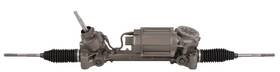
( Manufacturer Part Number: 2297R ), ( Type: Rack Pinion ), ( Oe/oem Part Number: Cv6z3504zkv, Cv6z3504zlh ), ( Universal Fitment: No )
Review FORD C max And Electric Rack Pinion fits FOCUS 2015–2018
The **Ford 2297R (2015 2018 C-Max & Focus Electric Rack & Pinion Assembly)** is a precision-engineered steering system designed to deliver smooth, responsive, and reliable handling for Ford s all-electric C-Max and Focus models during its production run. This rack-and-pinion assembly represents a refined evolution of Ford s steering technology, tailored specifically for the unique demands of electric vehicle (EV) platforms, where weight distribution and torque steer are critical considerations. Built to Ford s exacting standards, this rack features a **high-strength, corrosion-resistant housing** constructed from durable steel, reinforced with precision-machined internal components to ensure longevity and resistance to the harsh conditions often encountered in urban and highway driving. The rack incorporates a **tapered roller bearing system** at both ends, providing low-friction operation and minimizing play, which is essential for maintaining steering feel and reducing wear over time. The pinion shaft, machined from high-grade alloy steel, engages with the rack teeth via a **helical gear design**, optimizing efficiency and reducing noise critical for the quiet cabin environment of an electric vehicle.
The **2297R rack-and-pinion assembly** is engineered with a **14.5:1 steering ratio**, striking a balance between precision and ease of maneuverability, making it ideal for both city driving and highway stability. Ford s engineers have incorporated **self-centering features** to mitigate torque steer, a common issue in EVs where the front wheels can exhibit slight resistance when accelerating due to the vehicle s weight shift. This is achieved through a **hydraulic damper system** integrated into the rack, which absorbs minor vibrations and dampens road-induced oscillations, resulting in a more composed and predictable steering response. The assembly also includes **pre-loaded ball joints** at the tie rod ends, ensuring consistent alignment and reducing the risk of play or looseness over extended use. For added durability, the rack is treated with **zinc-rich coatings** and **epoxy-based sealants** to protect against rust and corrosion, particularly important for vehicles operating in regions with salty roads or high humidity.
Compatibility with the **2015 2018 Ford C-Max Electric and Focus Electric** models is seamless, as this rack is specifically designed to interface with the vehicles **electric power steering (EPS) systems**, which rely on precise feedback from the steering column to adjust assist levels dynamically. The rack s **integrated mounting points** align perfectly with the chassis, ensuring proper alignment and minimizing stress on suspension components. Whether navigating tight parking spaces or cruising at highway speeds, the **2297R** delivers a **direct, engaging feel** without the lag often associated with heavier, traditional hydraulic steering systems. For maintenance and longevity, Ford recommends periodic inspections of the **tie rod ends, bushings, and rack boots** to prevent contamination and ensure optimal performance. When properly cared for, this rack-and-pinion assembly is built to last the life of the vehicle, embodying Ford s commitment to reliability and performance in its electric lineup.
### **Pros and Cons of Buying a 2015 2018 Ford Focus Electric (C-Max) with Rack & Pinion Steering**
#### **Pros**
1. **Electric Efficiency and Cost Savings**
The Ford Focus Electric (and C-Max variant) is a plug-in hybrid electric vehicle (PHEV) with a fully electric range of up to **38 45 miles** (depending on model year and driving conditions). This allows for zero-emission driving in daily commutes, reducing fuel costs significantly. Even when the battery is depleted, the vehicle retains a **hybrid mode** with a small gasoline engine, ensuring extended range.
2. **Lower Operating Costs**
Electricity is cheaper than gasoline, and the Focus Electric s battery range covers most short-to-medium daily trips. Maintenance costs are also lower due to fewer moving parts compared to traditional internal combustion engines (no oil changes, fewer spark plugs, etc.).
3. **Government Incentives and Tax Benefits**
Many regions offer **tax credits, rebates, or exemptions** for electric vehicles, including the Focus Electric. In the U.S., federal tax credits (up to **$7,500**) may still apply depending on purchase date and manufacturer eligibility. Some states also provide additional incentives.
4. **Smooth and Quiet Driving Experience**
The electric motor provides **instant torque**, resulting in quick acceleration and a very smooth ride. The absence of an internal combustion engine means **no vibrations, fewer moving parts, and reduced noise**, making for a quieter cabin.
5. **Reliability of the Ford Hybrid System**
Ford s hybrid/electric systems in this generation are **well-engineered and durable**. The Focus Electric s battery and hybrid components are designed to last, though battery degradation over time is a consideration (typically **80 90% capacity after 100,000 miles**).
6. **Good Resale Value for a PHEV**
Plug-in hybrids tend to hold their value better than full EVs or traditional gas cars, especially as fuel prices fluctuate. The Focus Electric remains a **practical choice** for those who want electric driving without range anxiety.
7. **Rack & Pinion Steering (Standard on These Models)**
The **rack-and-pinion steering system** (as opposed to recirculating ball or worm gear) is generally **more responsive, durable, and easier to repair** than older steering setups. It also requires less maintenance than hydraulic power steering in some cases.
8. **Compact and Maneuverable Size**
The Focus Electric (and C-Max) is a **smaller, more agile** vehicle compared to larger SUVs or trucks, making it ideal for urban driving, parking in tight spaces, and navigating city traffic.
9. **Hybrid Mode for Longer Trips**
When the battery is depleted, the vehicle seamlessly switches to **hybrid mode**, extending range to **300 400 miles** on a full tank of gas. This eliminates range anxiety for road trips.
10. **Available Tech and Safety Features**
Depending on the trim, these models come with features like:- **Ford SYNC infotainment** (with Bluetooth, USB, and sometimes navigation)
- **Standard stability control, traction control, and airbags**
- **Some trims include adaptive cruise control or lane-keeping assist**
---
#### **Cons**
1. **Limited Electric Range (Even for a PHEV)**
The **38 45 mile electric-only range** is sufficient for short commutes but **not ideal for long daily electric-only trips**. If you frequently drive more than this distance without recharging, you ll rely heavily on the gasoline engine, reducing fuel savings.
2. **Battery Degradation Over Time**
Lithium-ion batteries degrade with **charge cycles and age**. After **5 10 years or 100,000 150,000 miles**, the battery may hold **only 70 80% of its original capacity**, reducing electric range. Replacing the battery can be **expensive ($3,000 $6,000 )**.
3. **Charging Infrastructure Limitations**
- **Home charging is ideal**, but not everyone has a garage or dedicated parking with an outlet.
- **Public charging stations** may be scarce in some areas, leading to **convenience issues** if you frequently drive without a full charge.
- **Charging time** (even at Level 2 chargers) can take **4 8 hours** for a full charge, which may not be practical for daily use.
4. **Higher Upfront Cost (Compared to Gas Cars)**
The **2015 2018 Focus Electric was more expensive** than its gasoline counterpart at launch. While used prices have dropped, it may still cost **$10,000 $20,000 more** than a comparable gas-powered Focus.
5. **Hybrid System Complexity**
The **hybrid/electric drivetrain is more complex** than a simple gas engine, meaning **more potential points of failure**. Common issues include:- **Battery cooling system malfunctions**
- **Hybrid control module failures**
- **Transmission or motor issues** (though rare in this model)
- **Higher repair costs** if something goes wrong with the electric components.
6. **Reliability Concerns with Older Models**
- **2015 2017 models** had some **early battery and software glitches** (e.g., regenerative braking issues, occasional check engine lights).
- **2018 models improved slightly**, but **long-term reliability data is still limited** compared to gas cars.
- **Hybrid-specific repairs** (e.g., battery replacement, inverter issues) can be **costly and time-consuming**.
7. **Weight and Handling Trade-offs**
- The **battery adds significant weight**, which can affect **acceleration and fuel efficiency** in hybrid mode.
- Some owners report **softer suspension tuning** compared to sportier Focus models, though this is subjective.
8. **Resale Value Depreciation**
While PHEVs hold value better than full EVs, the **Focus Electric s resale depreciation is still higher** than a comparable gas car. If you plan to sell it in a few years, you may not recoup as much as expected.
9. **Limited Performance Compared to Full EVs**
- The **Focus Electric is not as fast or efficient** as modern full EVs (e.g., Tesla Model 3, Nissan Leaf).
- **Top speed in electric mode is 90 mph**, and acceleration is **not as quick** as newer EVs.
10. **Potential for Higher Maintenance Costs**
- **Hybrid-specific repairs** (e.g., battery cooling fans, voltage regulators) can be **more expensive** than traditional car repairs.
- **Electric motor and inverter failures** (though rare) can be costly to fix.
---
### **Ending Conclusion**
The **2015 2018 Ford Focus Electric (C-Max) with rack-and-pinion steering** is a **practical plug-in hybrid** that excels in **urban driving, fuel savings, and low emissions** for short trips. It is a **better choice than a full EV** for those who want **electric driving without range anxiety** but don t want to commit to a battery-only vehicle. The **rack-and-pinion steering is a plus**, making the car more responsive and easier to maintain than older steering systems.
However, **battery degradation, limited electric range, and higher upfront costs** are significant drawbacks. If you **frequently drive long distances without charging**, the gasoline engine will dominate, reducing fuel savings. **Charging infrastructure and battery longevity** remain concerns, especially for older models.
**Best for:**- **Commuters** who drive **
- **Urban drivers** who prioritize **low emissions, smooth rides, and fuel efficiency**.
- **Those who want a hybrid without full EV commitment** but still benefit from electric driving.
**Not ideal for:**- **Long-distance drivers** who frequently exceed the electric range.
- **Budget-conscious buyers** who cannot afford potential **high repair costs** (especially battery-related).
- **Those who prioritize cutting-edge tech or high performance** over practicality.
---
### **Final Recommendation**
**Buy the 2015 2018 Ford Focus Electric (C-Max) if:**You **charge it daily** (at home or work) and drive **mostly short distances**.
You **want to save on fuel costs** while still having a **gasoline backup** for long trips.
You **prefer a small, efficient car** over a larger SUV or truck.
You **find a well-maintained example** with **no battery issues** and a **clean service history**.
You **benefit from government incentives** (tax credits, lower emissions fees).
**Avoid it if:**You **rarely charge it** and mostly drive on gas, **negating fuel savings**.
You **cannot afford potential battery replacement costs** ($3,000 $6,000 ).
You **live in an area with poor charging infrastructure**.
You **prioritize performance or tech** over practicality (this is not a high-end EV).
Details:
The product is a 2015 2018 Ford C-Max and Focus Electric Rack Pinion assembly. It is a crucial component for the steering and suspension systems of electric vehicles, providing smooth precise performance. It is a genuine Ford part with the OE/OEM numbers CV6Z3504ZLH and CV6Z3504ZKV, manufacturer number 2297R. This rack and pinion is specifically designed for these model vehicles not a universal fitment, ensuring proper functionality compatibility.
part #: 2297r price
- $739.95
specifications steragebo:
- for models: Focus
- for makes: Ford
- for years: 2015-2018
- mpn: 2297r
- type: Rack Pinion
- oe/oem part number: Cv6z3504zkv, Cv6z3504zlh
- universal fitment: No
shipping steragebo:
- cost: $0.00
- class: Standard
- type: Calculated
- transit: 4-11 Days
- service: USPS Ground Advantage
- carrier: USPS
general steragebo:
- condition: Remanufactured
- Car Truck Parts Accessories > Steering Suspension > Gearboxes, Rack Pinions
offer steragebo:
- options: Ship-to-home
- sold: 0
- availability: In Stock
- quantity: 1
- started: February 24, 2026
seller steragebo:
- rating: 100.0%
- # reviews: 335
- city: Indianapolis, Indiana
returns steragebo:
- policy: Returns Accepted
- paid by: Seller
- time: 30 Days
payments steragebo:
- other
- wallet: Paypal
- credit card: Discover
Ford 2297R Is Similar To:
- K8442 Mercury Rh Rack Pinion Bellow Kit Fits Ford (33.6% similar) May not fit all vehicles within stated year range, due to possible variations. McKay Norris Rh rack pinion bellow kit K8442 fits mercury bobcat 75-80, ford mustang 74-78, pinto H157 lookup part no. Please refer to pictures for item condition...(June 21st, 2018)
- 082617574037 Ford Rack And Pinion (35.6% similar) This item is in good working condition...(September 2nd, 2017)
- 12213825 Aftermarket Products New Steering Rack Mustang Ford Ii Pinto Mercury (31.3% similar) The items are brand new parts that look and fit same as original, except at a much better price...(October 27th, 2018)
- 13 Ford C-max Steering Gear-rack (40.4% similar) No expedited or over night shipping is available. 13 ford c-max steering gear rack elec. Keenan bros. In the rare case that an item arrives damaged, please via message within 24 hours for instructions...(October 29th, 2017)
- 141633745 Ford Fusion Steering Gear Rack And Pinion (44.4% similar) Shipped with ups ground ford fusion steering gear rack and pinion. Condition is used...(March 21st, 2019)
- 2101036002 Oe Ford Freestyle Steering Column Shaft Rack Joint Linkage (34.9% similar) You are buying on a lower steering shaft removed from 2007 freestyle. The steering shaft joints are free and it has been spray with a rust protector. This is a genuine oem ford part. The part number is: 6F9Z-3B676-AA this lower steering shaft will also fit: FREESTYLE2005- 2007 ford five ...(May 23rd, 2018)
- 231 Rack Doctor Ford Pinion 704907597181 (28.9% similar) Application notes for this unit fits all NON-1. 8l model's with power steering...(February 14th, 2019)
- 27259 Rare Parts Rack And Pinion Bellow Front Fits Ford Pinto (32.2% similar) Or Canadian drivers license, us. State id, Canadian province us. Military id, Mexican voter registration card, passport, us. Information about free shipping for orders over 75: receive ground on all totaling at least 75. Postal service or FedEx. Place the return shipping label on outside of box and ...(January 28th, 2019)
- 2c3z3504aarm Ford Oem 03-05 Excursion-rack (28.3% similar) ...(December 8th, 2017)
- 2m5z-3c716-aa Ford Focus Power Steering Bushings (34.3% similar) Bid for a pair of new ford emo power steering bushing...(July 7th, 2018)
- 12-14 F150 Steering Gear Rack Fits Ford Pickup 62074 551-02205 (28.6% similar) Via message within 24 hours for instructions. No expedited shipping is available. The 90 day parts only warrant only covers main component specifically listed only and does not cover any secondary parts or attached accessories that may left on part like wiring, etc...(October 14th, 2016)