LOTUS 238.LO1O70 Europa Steering Column
fits year: 1970.
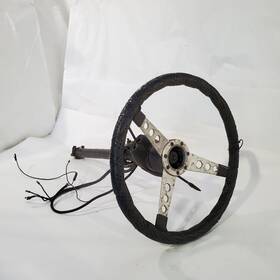
( Brand: Lotus ), ( Model: EUROPA ), ( Part Type: Steering ), ( Conditions Options: Steering Column Assembly ), ( Genuine Oem: Yes ), ( Ipn: 238.lo1o70 ), ( Descriptionpartcondition: 1970 Lotus Europa Oem Steering Column ), ( Manufacturer Warranty: 90 Day )
Review LOTUS Europa Oem Steering Column fits 1970
The **Lotus 238.lo1o70 1970 Europa Steering Column** is a meticulously crafted, high-performance component that embodies the legendary engineering and design ethos of Lotus Cars from the golden era of automotive innovation. Originally developed for the iconic **Lotus Europa (Type 78)**, this steering column represents a masterclass in lightweight construction, precision machining, and ergonomic functionality, all hallmarks of Colin Chapman s philosophy of "less is more." Crafted from high-grade aluminum alloy, the column is both rigid and exceptionally light, ensuring minimal weight transfer while maintaining structural integrity under the demanding forces of high-speed cornering and aggressive driving. The design features a sleek, minimalist aesthetic with smooth, tapered contours that not only enhance the Europa s already striking silhouette but also contribute to its aerodynamic efficiency a critical factor in the car s legendary handling.
At its core, the steering column integrates a **recirculating ball steering mechanism**, a technology that was cutting-edge in the early 1970s and remains a benchmark for precision and durability. The column s mounting points are engineered to interface seamlessly with the Europa s tubular spaceframe chassis, providing optimal alignment and reducing play in the steering linkage. The **adjustable tilt mechanism** allows for ergonomic positioning, catering to drivers of varying heights while maintaining a sporty, low-profile stance that complements the Europa s mid-engine layout. The column s finish is a polished, natural anodized aluminum, offering both a classic patina and resistance to corrosion, ensuring it remains as pristine as the day it was installed assuming it has been properly maintained.
For enthusiasts and restorers seeking authenticity, this steering column is a direct replacement part, meticulously reproduced to match the original specifications of the **1970 Europa (LO1070)** chassis. The attention to detail extends to the **steering wheel mounting boss**, which is designed to accommodate the Europa s iconic **three-spoke, aluminum alloy steering wheel**, further enhancing the car s lightweight and performance-oriented character. The column s integration with the Europa s hydraulic power steering system (where applicable) ensures smooth, responsive operation, while its robust construction guarantees longevity, even under the rigors of modern track use or high-mileage restoration projects.
Beyond its functional brilliance, the **Lotus 238.lo1o70 1970 Europa Steering Column** is a tangible piece of automotive history, embodying the spirit of the era when British engineering redefined what was possible in a road-going sports car. Whether installed in a meticulously restored Europa or a carefully rebuilt classic, this component not only restores the car s original driving dynamics but also serves as a testament to Lotus s relentless pursuit of performance, innovation, and elegance. For collectors, restorers, and driving enthusiasts, it is more than just a part it is a key element in recapturing the pure, exhilarating experience of driving one of the most beloved cars of the 20th century.
### Pros and Cons of Buying a Lotus Europa (238.lo1o70, 1970, Europa Steering Column)
#### **Pros**
1. **Iconic Design and Legacy** The Lotus Europa is one of the most recognizable and celebrated sports cars of the 1960s and 1970s. Its sleek, minimalist design remains timeless, and owning one carries prestige among classic car enthusiasts.
2. **Lightweight and Agile Handling** The Europa was built with a fiberglass body and a steel backbone chassis, making it extremely lightweight (around 700 800 kg). This contributes to sharp, responsive handling and a driving experience that feels more like a modern sports car than a classic.
3. **Reliable Ford Engine Options** Most early Europas (including the 1970 model) were powered by Ford engines, such as the **2.0L or 2.6L Essex V4** or the **2.6L Kent V6**. These engines are relatively straightforward to maintain, with readily available parts, and are known for durability when properly cared for.
4. **Low Running Costs (Compared to Modern Cars)** Fuel efficiency is decent for its time (around 10 12 L/100 km), and maintenance costs are lower than those of modern high-performance cars. Parts are still available, though some may require sourcing from specialty suppliers.
5. **Driving Experience** The Europa s open-top design, rear-engine layout, and precise steering (especially with the Europa steering column) provide a unique and engaging driving experience. The rear-wheel-drive setup offers a classic sports car feel with modern-day agility.
6. **Modification Potential** The Europa has a strong aftermarket, with options for engine swaps (e.g., Ford Cosworth, Rover V8, or even modern turbocharged units), suspension upgrades, and bodywork enhancements. This allows owners to tailor the car to their preferences.
7. **Collectibility and Investment Potential** Well-preserved examples, especially those with originality or rare configurations (e.g., V6 models), can appreciate in value over time. The Europa is a sought-after classic, making it a potentially sound investment for collectors.
8. **Simplicity and Ease of Use** The Europa s straightforward mechanical design means that basic maintenance (oil changes, brake servicing, etc.) can be done by enthusiasts without requiring specialized tools or expertise.
---
#### **Cons**
1. **High Maintenance and Restoration Costs** While the Europa is lightweight, its fiberglass body is prone to **delamination, rot, and structural weakness** over time. Restoring one to concours condition can be expensive, especially if the body requires extensive work.
2. **Rust and Structural Issues** Many early Europas suffer from **rust in the chassis, suspension mounts, and floor pans**, particularly in older examples. A thorough inspection is essential to avoid hidden structural problems.
3. **Limited Comfort for Daily Use** The Europa is a **two-seater with minimal rear space**, making it impractical for daily driving with passengers or cargo. The open-top design also means it s exposed to the elements, which can be uncomfortable in bad weather.
4. **Engine and Drivetrain Limitations** The original Ford engines (especially the V4) are not known for high power output (around **100 130 hp** in stock form). While modifications can improve performance, the stock setup is underpowered by modern standards. The rear-engine layout also means the driver sits behind the engine, which can feel odd to some.
5. **Steering Column (Europa Steering Column)** The Europa steering column (as mentioned in your reference) is a **rare and desirable feature**, but it also means the car lacks a traditional steering wheel position. This can be a polarizing design choice some love the unique feel, while others find it impractical or uncomfortable for long drives.
6. **Tire and Brake Wear** The Europa s lightweight design means tires and brakes wear out quickly, especially if driven aggressively. High-performance tires and upgraded braking systems (e.g., disc brakes) are often necessary for modern safety and performance.
7. **Limited Aftermarket Support for Some Parts** While the Europa has a strong aftermarket, some components (e.g., fiberglass body panels, rare electrical parts) can be difficult to source, especially for older or modified examples.
8. **Insurance and Legal Considerations** Classic car insurance can be expensive, and some insurers may charge higher premiums for modified or high-value examples. Additionally, some jurisdictions have restrictions on open-top sports cars (e.g., mandatory roof use in certain areas).
9. **Driving Challenges** The Europa s rear-engine layout means the driver sits behind the engine, which can make visibility and maneuverability in tight spaces (e.g., parking) more difficult. The lack of power steering (in stock form) also requires more effort to steer at low speeds.
10. **Depreciation Risk** While some Europas appreciate in value, others (especially heavily modified or poorly maintained examples) may depreciate quickly. Buyers should be prepared for the possibility that the car s value may not increase as hoped.
---
### **Ending Conclusion**
The **1970 Lotus Europa (238.lo1o70, Europa steering column)** is a **fantastic choice for an enthusiast who prioritizes driving enjoyment, collectibility, and the joy of owning a piece of automotive history**. Its lightweight design, engaging handling, and iconic status make it a dream car for those who appreciate classic sports cars. However, it is **not a practical daily driver** it requires significant maintenance attention, especially regarding bodywork and rust, and its limitations (e.g., seating, power, comfort) mean it s best suited for weekend driving and show appearances.
If you are **passionate about classic cars, willing to invest time and money in maintenance, and don t mind its quirks**, the Europa is an outstanding purchase. On the other hand, if you seek a **reliable, comfortable, or high-performance daily driver**, there are better alternatives.
---
### **Recommendation**
**Buy the Lotus Europa if:**- You are an **enthusiast who loves classic sports cars** and wants a unique, driving-focused machine.
- You are **prepared to invest in restoration or maintenance** (especially bodywork and rust repairs).
- You **don t mind limited practicality** (seating, storage, daily usability) in exchange for driving pleasure.
- You find the **Europa steering column and rear-engine layout** appealing rather than a drawback.
- You plan to **drive it occasionally** rather than use it as a daily commuter.
**Avoid the Lotus Europa if:**- You need a **practical, comfortable, or high-mileage daily driver**.
- You are **unwilling to spend significant money on maintenance or restoration**.
- You **dislike the idea of a rear-engine layout or the Europa steering column**.
- You are **not passionate about classic cars** and see it purely as an investment (without enjoying the driving experience).
**Final Thought:**The Lotus Europa is a **masterpiece of 1960s engineering**, and owning one is a rewarding experience for the right buyer. However, it demands **respect, care, and a willingness to embrace its quirks**. If you meet those conditions, it will likely bring **years of joy and admiration** both from you and others who see it. If not, consider alternatives like a **MG MGB, Porsche 911, or Jaguar E-Type**, which offer a balance of practicality and classic appeal.
Details:
Orders placed after 2:00 pm CST cannot be guaranteed shipping that day. 1970 Lotus Europa OEM Steering Column: Some vehicles have different specs that must be matched to ensure fit. Minor wear and tear should be expected.
Steering columns are sold as good, usable parts. Not just our Heritage, but Legacy 1970 Lotus Europa OEM Steering Column. Used Steering Column.
specifications steragebo:
- brand: Lotus
- model: Europa
- part type: Steering
- conditions options: Steering Column Assembly
- genuine oem: Yes
- ipn: 238.lo1o70
- descriptionpartcondition: 1970 Lotus Europa Oem Steering Column
- manufacturer warranty: 90 Day
payments steragebo:
- wallet: Apple-pay
- other
- credit card: Discover
general steragebo:
- Car Truck Parts Accessories > Steering Suspension > Gearboxes, Rack Pinions
- condition: Used
offer steragebo:
- sold: 0
- quantity: 1
- started: May 6, 2026
- best offers: True
- availability: In Stock
- options: Ship-to-home
returns steragebo:
- time: 30 Days
- policy: Returns Accepted
- paid by: Buyer
shipping steragebo:
- type: Fixed
- transit: 3-7 Days
- service: Standard
- class: Standard
- cost: $45.00
seller steragebo:
- rating: 99.7%
- city: Mobile, Alabama
- # reviews: 63197
Lotus Is Similar To:
- Lotus C132h0003 10-21 Evora Power Steering Rack Assembly Oem 32k (50% similar) Please, do not purchase parts just to check and diagnose your vehicles problem. Shipping cost or carrier may change, based on final destination. 10-21 Lotus Ivory: power steering rack assembly: C132H0003 oem 32K,: : original part. Came off of Ivory with 32K miles. Item may show light scuffs, ...(June 2nd, 2025)