HYUNDAI 56500-K4000 Kona Electric Power Steering Gear Rack Konaelec 551-10779 Pinion
fits make: Hyundai. year: 2019–2023.
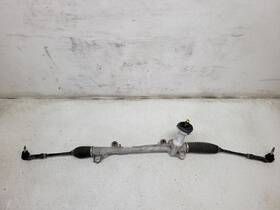
( Manufacturer Part Number: 56500-K4000 ), ( Model: KONAELEC ), ( Conditions Options: Steering Rack Pinion ), ( Genuine Oem: Yes ), ( Ipn: 551-10779 ), ( Year: 2021 ), ( Descriptionpartcondition: Power Steering Gear Rack And Pinion Will Have Inner And Outer T ), ( Manufacturer Warranty: 6 Months ), ( Type: Rack Pinion )
Review HYUNDAI Kona Electric Power Steering Gear Rack And Pinion fits 2019–2023
The **Hyundai 56500-K4000 Electric Power Steering Gear Rack and Pinion Assembly** (compatible with the **2020 2023 Hyundai Kona Electric**) is a precision-engineered component designed to deliver seamless, responsive, and effortless steering performance in your vehicle s all-electric powertrain system. This high-performance steering rack and pinion assembly integrates Hyundai s advanced electric power steering (EPS) technology, ensuring smooth, low-effort steering even at low speeds, while maintaining precise feedback and stability at higher velocities. Crafted from durable, corrosion-resistant materials, including high-grade steel and reinforced polymer components, this rack and pinion assembly is engineered to withstand the demands of daily driving, urban commuting, and occasional off-road adventures, all while contributing to the Kona Electric s efficient, emission-free operation.
The **K4000 model** features a compact yet robust design optimized for the Kona Electric s tight underbody clearance and front-wheel-drive layout, ensuring a perfect fit without compromising on performance. The rack s internal ball-screw mechanism, combined with Hyundai s proprietary electric motor and torque sensor, provides instant, variable assist adjusting steering effort dynamically based on vehicle speed, road conditions, and driver input. This not only enhances comfort during city driving but also improves maneuverability in tight parking spaces or when navigating sharp turns. The assembly s sealed design minimizes the risk of contamination from road debris, moisture, or dust, extending its lifespan and reducing maintenance requirements, a critical advantage for owners seeking long-term reliability in their electric vehicle.
For those upgrading or replacing a worn or damaged steering rack, this **OEM-quality part** offers a direct replacement solution that restores the Kona Electric s original handling dynamics, ensuring consistent alignment, minimal play, and optimal steering response. Whether addressing issues like excessive play, fluid leaks, or a sluggish steering feel, this rack and pinion assembly is a critical component for maintaining the vehicle s safety, efficiency, and driving enjoyment. Backed by Hyundai s engineering standards, it is built to meet or exceed the performance expectations of the original equipment, providing peace of mind for owners who prioritize both performance and durability in their electric Kona. Proper installation by a certified technician is recommended to ensure optimal function and longevity.
### **Pros and Cons of Buying a Hyundai Kona Electric Power Steering (EPS) Gear Rack and Pinion (Model Years 2019 2023)**
#### **Overview**
The Hyundai Kona (2019 2023) with an electric power steering (EPS) gear rack and pinion is a popular compact SUV known for its efficiency, tech features, and value. However, like any vehicle, it has strengths and weaknesses depending on usage, budget, and priorities.
---
### **Pros**
1. **Fuel Efficiency and Cost Savings**
- The Kona (especially the **N Line, SEL, or Hybrid models**) offers excellent MPG (up to **30 35 MPG combined** in non-hybrid versions, **40 MPG in hybrid trims**).
- Lower fuel costs compared to larger SUVs or trucks.
- The **2023 model** introduced a **more efficient 1.6L turbo engine** (in non-hybrid versions), improving performance while maintaining efficiency.
2. **Electric Power Steering (EPS) Advantages**
- **Smoother, lighter steering feel** compared to hydraulic systems, reducing driver fatigue on long trips.
- **No power steering fluid leaks** (a common issue in hydraulic systems), reducing maintenance hassles.
- **Better fuel economy** since EPS eliminates the need for a hydraulic pump.
- **Quieter operation** with fewer moving parts.
3. **Tech and Infotainment Features**
- **10.25-inch touchscreen (2021 models)** with **Apple CarPlay, Android Auto, and wireless charging**.
- **Hyundai SmartSense safety suite** (available in higher trims) includes:- Forward Collision-Avoidance Assist (FCA)
- Lane Keeping Assist (LKA)
- Blind-Spot Collision-Avoidance Assist (BCA)
- Adaptive Cruise Control (ACC)
- **Wireless Apple CarPlay & Android Auto (2021 )** for seamless connectivity.
- **Available 8-inch digital gauge cluster** (2022 models) for a modern look.
4. **Compact Size and Maneuverability**
- **Easy to park and navigate** in urban areas due to its **173.6-inch length** (shorter than most SUVs).
- **Good ground clearance (7.5 inches)** for light off-roading or snow driving.
- **Tight turning radius** (34.1 ft) makes it ideal for city driving.
5. **Reliability and Warranty**
- Hyundai offers a **10-year/100,000-mile powertrain warranty** (one of the best in the industry).
- **5-year/60,000-mile basic warranty** (covers most components).
- **Corrosion-perforation warranty** (5 years/100,000 miles).
- Generally **fewer reported reliability issues** compared to some Japanese competitors (e.g., Toyota RAV4, Honda CR-V).
6. **Affordable Used Market (2019 2021 Models)**
- **2019 2020 models** are now **well-priced used**, often under **$20,000 $25,000** with low miles.
- **2021 2022 models** still hold value better than some rivals due to strong resale demand.
- **2023 models** (especially **N Line or Hybrid**) are **still relatively new** but may have higher upfront costs.
7. **Hybrid Option (2020 2023)**
- The **Hyundai Kona Hybrid** offers **up to 40 MPG combined** and **electric-only driving** (though limited range).
- **Lower emissions** and potential **fuel savings** in stop-and-go traffic.
- **Regenerative braking** helps extend battery life.
8. **N Line Performance Trim (2021 2023)**
- **200 horsepower** (with **2.0L turbo engine** in 2021 ).
- **Sport-tuned suspension** for a firmer, more responsive ride.
- **Unique styling** (N Line badging, 18-inch wheels) for those who want a sportier look.
- **Available AWD** (in some trims) for better traction.
9. **Low Maintenance Costs**
- **No traditional power steering fluid changes** (EPS reduces fluid-related repairs).
- **Simple engine (1.6L or 2.0L turbo)** with fewer known issues than some competitors.
- **Affordable parts and labor** compared to luxury SUVs.
10. **Good Resale Value**
- Hyundai ranks **among the best for resale retention** (especially hybrid and N Line models).
- **2023 models** hold value better than some rivals due to strong demand.
---
### **Cons**
1. **Interior Quality (Lower Trims)**
- **SE or L models** have **plastic-heavy interiors** that feel less premium.
- **2019 2020 models** had **thinner materials** compared to newer trims.
- **2021 models** improved with **better plastics and stitching**, but still not as refined as **Toyota RAV4 or Honda CR-V**.
2. **Ride Comfort (Firm Suspension)**
- The Kona has a **stiffer ride** compared to competitors like the **RAV4 or Mazda CX-5**.
- **N Line models** are particularly **bouncy** due to sport-tuned suspension.
- **Road noise** is noticeable at highway speeds (though better than some rivals).
3. **Cargo Space Limitations**
- **15.6 cu. ft. behind rear seats** (less than **RAV4 s 36.8 cu. ft.**).
- **Seats fold flat**, but **not as spacious** as larger SUVs.
- **Roof rails** are available but **not standard** on base trims.
4. **Hybrid Battery Concerns (2020 2023)**
- **Hybrid models** have a **limited warranty (8 years/100,000 miles)** on the battery pack.
- **No plug-in option** (unlike the **Kia Niro PHEV**), so **electric-only range is minimal**.
- **Battery degradation** over time (though Hyundai s warranty covers most issues).
5. **Infotainment Lag (Older Models)**
- **2019 2020 models** had **slower touchscreen response** compared to newer Android Auto/Apple CarPlay.
- **2021 models** improved with **faster processing**, but some users report **occasional glitches**.
6. **Rear Visibility**
- **Smaller rear windows** compared to some rivals, making **parking and reversing** slightly more difficult.
- **No standard rearview camera** on base trims (added in **2021 models**).
7. **Resale Depreciation (Newer Models)**
- **2023 models** may **depreciate faster** than expected if demand drops.
- **Hybrid and N Line trims** hold value better than **base SE models**.
8. **Limited Off-Road Capability**
- **No true off-road trim** (unlike **RAV4 Adventure or CX-5 AWD-Select**).
- **AWD is available but not as capable** as competitors in mud/snow conditions.
- **Ground clearance is decent but not extreme** (7.5 inches).
9. **Engine Noise (Turbo Models)**
- **2.0L turbo engine (2021 )** can be **loud at idle** (especially in **N Line**).
- **1.6L engine (2023)** is quieter but **less powerful** than the turbo.
10. **Dealer Markups on New Models**
- **2023 Kona (especially N Line or Hybrid)** may have **higher than expected MSRP** due to supply chain issues.
- **Used 2022 2023 models** could still be **overpriced** if demand remains high.
---
### **Common Issues to Watch For (2019 2023 Models)**
1. **EPS (Electric Power Steering) Failures**
- **Rare but possible** in **2019 2020 models** (some reports of **steering wheel locking up**).
- **2021 models** improved with **better software updates**.
- **Solution:** Check for **Hyundai recalls** and ensure **EPS system is functioning**.
2. **Infotainment Glitches**
- **2019 2020 models** had **occasional screen freezes** with Android Auto.
- **2021 models** are more stable but **not perfect**.
3. **Hybrid Battery Concerns**
- **No major recalls**, but **long-term battery health** should be checked if buying used.
- **Hy
Details:
Qualifications of Installer: Only a Certified ASE Mechanic or an automotive technician licensed by recognized state national authority may perform the installation. Proof of certification or licensing must be documented and available upon request. TESTED AND 6 MONTH WARRANTEED. Steering Gear/Rack Fits 19-21 KONA ELECTRIC 223091.
part #: 56500k4000 prices
- $235.00-$553.90
specifications steragebo:
- for makes: Hyundai
- for years: 2019-2023
- mpn: 56500-k4000
- model: Konaelec
- conditions options: Steering Rack Pinion
- genuine oem: Yes
- ipn: 551-10779
- year: 2021
- descriptionpartcondition: Power Steering Gear Rack And Pinion Will Have Inner And Outer T
- manufacturer warranty: 6 Months
- type: Rack Pinion
offer steragebo:
- availability: In Stock
- started: February 23, 2026
- quantity: 1
- sold: 0
- best offers: True
- options: Ship-to-home
payments steragebo:
- other
- credit card: Mastercard
- wallet: Apple-pay
shipping steragebo:
- cost: $0.00
- type: Fixed
- service: UPS Ground
- class: Standard
- transit: 3-7 Days
- carrier: UPS
seller steragebo:
- rating: 99.8%
- # reviews: 3794
- city: Rancho Cordova, California
returns steragebo:
- paid by: Buyer
- time: 30 Days
- policy: Returns Accepted
general steragebo:
- condition: Used
- Car Truck Parts Accessories > Steering Suspension > Gearboxes, Rack Pinions
Hyundai 56500-K4000 Is Similar To:
- 13880546 Ssb Complete Steering Rack For Hyundai Sonata Kia Optima Magentis (34.1% similar) Surfaced to oe specifications racks are finished with proper surface prevent leaking and prolong life. New Teflon rings installed on spoon valves to restore internal sealing of rack and pinion. This part compatible with notes important details year make model trim engine 15 in...(August 12th, 2018)
- 2009-2012 Hyundai Elantra Power Steering (41.5% similar) No expedited shipping is available. Hyundai Elnora power steering column with motor oem black key please verify compatibility of this part your vehicle before purchase. If an item arrives damaged, please via message within 24 hours for instructions...(November 15th, 2017)
- 2011 14 Hyundai Sonata Power (30.5% similar) No expedited shipping available. 4l this part will fit these makes and model's with options sonata power rack pinion if an item arrives damaged, please via message within 24 hours for instructions...(February 13th, 2018)
- 438 23043 001 Wd Express Genuine Rack And Pinion Assembly Fits Hyundai Elantra (33.3% similar) Price is for 1 - adjust quantity in cart. Be extra careful that you are purchasing the right item so will not have any fitment issues...(November 11th, 2018)
- 438 23046 066 Wd Express Rack And Pinion Complete Unit Fits Hyundai Genesis (30.3% similar) Once in the store, use search box to find next item. 8 track coupe 2-DOOR. 0t track coupe 2-DOOR, example: type in fiat brake pad choose the correct item by looking compatibility for each listing. Some pictures show different angles of the same item. Scroll down to see what it is. Every listing is ...(June 1st, 2018)
- 56300-3x202 Hyundai Elantra Sedan Power Steering Column Motor Oem (38.7% similar) Free shipping is within the continental USA hyundai Elnora sedan power steering column w motor 3X202 oem good condition...(November 21st, 2018)
- 563002h300 Mobi Hyundai Elantra Electric Power Steering Motor Gear Column (51.5% similar) Sculptors fits hyundai power steering motor gear column part 563002H300 XA0 H04...(July 1st, 2018)
- 56310 1r305 Hyundai Elantra Steering (33.3% similar) Brand new unused steering column opened for pictures only...(October 31st, 2017)
- 56310-2l300 Hyundai Elantra Touring Steering Column Oem (37.2% similar) What you see is get. 2012 hyundai Elnora touring steering column 563102L300 oem will fit:: up for sale is a used from 2009 Electra. Happy buying. Everything pictured below is what included in this offer shipping for item 16. Images:actual item pictured below...(May 30th, 2018)
- 563102t300 Hyundai Kia 11 Optima Steering (32.1% similar) Right is passenger side. This part was removed from a 2011 optimal stock number 16G024 and the mileage miles. All parts have been: carefully inspected. Transmission type manual or auto, and the body 2 door, 4/5 door hatch, etc. All parts must be installed to manufacturers specifications. This ...(February 28th, 2017)
- 564003x002 Hyundai Oem Elantra Steering (34.1% similar) ...(October 30th, 2018)