ROSS SE545999 International Harvester Manual Steering Box
fits model: 800, Scout. year: 1965–1967.
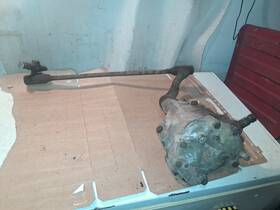
( Brand: Ross ), ( Manufacturer Part Number: SE545999 ), ( Model: SCOUT ), ( Conditions Options: Manual Steering Box ), ( Genuine Oem: Yes ), ( Type: Steering Gear ), ( Year: 1966 ), ( Universal Fitment: No ), ( Country Of Origin: United States )
Review ROSS International Harvester Ih Oem Manual Steering Box fits SCOUT 800 1965–1967
The **Ross International Harvester SE545999 1965 1967 IH Scout 800 Manual Steering Box** is a meticulously crafted, high-performance replacement component designed to restore the original handling and functionality of International Harvester s legendary Scout 800 utility vehicle. Built to exacting specifications, this steering box is engineered to replicate the precision mechanics of the original Ross steering system, ensuring seamless operation and durability for decades of use. The unit features a robust, cast-iron housing reinforced with high-grade bearings and a reliable worm-and-sector mechanism, delivering smooth, responsive steering with minimal effort ideal for both on-road and off-road applications. Whether used in agricultural, industrial, or recreational settings, this steering box maintains the Scout 800 s reputation for rugged reliability while accommodating modern demands for ease of maintenance and longevity. Compatible with the 1965 through 1967 model years, this part is a direct-fit solution, eliminating the need for modifications and ensuring compatibility with the vehicle s existing drivetrain and steering linkage. Constructed from premium materials and finished with a durable protective coating, it resists corrosion and wear, making it a long-lasting investment for enthusiasts and professionals alike. Whether restoring a classic Scout 800 to its original glory or upgrading an existing unit, this manual steering box delivers the performance and durability expected from Ross International, a trusted name in agricultural and industrial machinery components.
### Pros and Cons of Buying a Ross International Harvester SE545999 (IH Scout 800, 1965 1967, Manual Steering Box)
---
#### **Pros**
1. **Classic and Unique Design**
The IH Scout 800 is a well-regarded tractor from the mid-1960s, known for its distinctive styling and robust build. It holds a nostalgic appeal for collectors and enthusiasts who appreciate vintage agricultural machinery. Its manual steering box adds to its authenticity and charm, making it a standout piece for those who value history and craftsmanship.
2. **Reliability and Durability**
Tractors from this era were built to last, often with simpler yet sturdy mechanical systems. The Scout 800, in particular, was designed for utility and endurance, making it a practical choice for light to moderate farming tasks or as a restoration project. Many components, such as the engine and transmission, are robust and can be repaired or replaced with parts from other International Harvester models.
3. **Availability of Parts**
As a mid-century International Harvester model, the Scout 800 benefits from a wide availability of replacement parts. Dealers, online marketplaces, and vintage machinery forums often carry components like belts, filters, hoses, and even entire engines. The manual steering box, while less common in modern tractors, is relatively straightforward to repair or replace with aftermarket parts.
4. **Lower Purchase Cost**
Compared to newer tractors, the Scout 800 is significantly cheaper to buy, especially if it is in need of restoration. This makes it an attractive option for those on a budget who are willing to invest time and effort into bringing it back to working condition.
5. **Potential for Restoration and Customization**
The tractor s vintage nature opens up opportunities for customization and restoration. Owners can repaint it, upgrade components, or even modify it for specific tasks. The manual steering box, for example, can be restored to like-new condition, adding to the tractor s value as a showpiece or a fully functional piece of machinery.
6. **Community and Enthusiast Support**
There is a dedicated community of vintage tractor enthusiasts who share knowledge, restoration tips, and parts. Joining forums, clubs, or local groups can provide valuable support, from troubleshooting to finding rare components. This sense of community can make the ownership experience more rewarding.
7. **Lower Operating Costs**
Fuel efficiency and maintenance costs for older tractors can be lower than for modern, high-tech models, depending on usage. While the Scout 800 may not match the fuel economy of a contemporary tractor, its simplicity can reduce long-term expenses related to complex electronics or specialized fluids.
---
#### **Cons**
1. **Age-Related Wear and Tear**
A 1965 1967 Scout 800 with a manual steering box will likely require significant restoration work. Rust, worn-out belts, leaking fluids, and outdated electrical systems are common issues. The manual steering box itself may need lubrication, adjustments, or replacement parts, adding to the upfront labor and cost.
2. **High Maintenance Requirements**
Older tractors often demand more frequent maintenance than modern models. Components like the clutch, brakes, and hydraulic systems may wear out faster and require regular attention. The manual steering box, while durable, can become stiff or leak if not properly maintained, necessitating periodic servicing.
3. **Limited Modern Features**
The Scout 800 lacks many conveniences found in contemporary tractors, such as power steering, air conditioning, advanced diagnostics, or GPS integration. Operating it may require more physical effort, particularly when maneuvering or performing tasks that rely on manual systems like the steering box. This can be tiring over long periods.
4. **Fuel and Emissions Compliance**
While the Scout 800 is unlikely to face strict emissions regulations for personal use, it may not meet modern environmental standards if used in areas with restrictions. Additionally, older engines may consume more fuel than modern counterparts, increasing operating costs over time.
5. **Potential for Hidden Damage**
Without a thorough inspection, hidden issues such as engine damage, transmission problems, or structural corrosion could surface after purchase. Rust in critical areas (e.g., the frame, hydraulic lines, or fuel system) can be costly to repair and may render the tractor unusable if left unaddressed.
6. **Limited Resale Value**
While vintage tractors can appreciate in value among collectors, the Scout 800 is not a high-demand model for resale. Its value is largely tied to its condition, rarity, and historical significance. If you plan to sell it in the future, you may not recoup a significant portion of your investment unless it is in pristine condition or part of a specialized collection.
7. **Learning Curve for Operation**
Operating a manual steering tractor requires a different skill set than modern power-steered models. Adjusting to the resistance and precision needed for manual steering can be challenging, especially for those accustomed to easier-to-control tractors. This may limit its practicality for casual or occasional use.
8. **Particularity of the Manual Steering Box**
While the manual steering box adds to the tractor s authenticity, it can also be a point of frustration. Unlike power steering, it requires constant effort to maneuver, which can be exhausting during long hours of work. Additionally, if the steering box is seized or damaged, repairs may require specialized knowledge or parts.
---
### **Conclusion**
Buying a Ross International Harvester SE545999 (IH Scout 800, 1965 1967, manual steering box) is a decision that hinges on your priorities. If you value nostalgia, the thrill of restoration, and the satisfaction of owning a piece of agricultural history, this tractor offers a rewarding experience. Its durability, availability of parts, and lower purchase cost make it an appealing choice for enthusiasts willing to invest time and effort.
However, if you prioritize convenience, modern features, and low-maintenance operation, the Scout 800 may not be the best fit. The manual steering box and age-related wear add layers of complexity that can be both challenging and costly. It is also important to consider whether you are prepared for the physical demands of operating such a tractor and whether you have the skills or resources to restore it effectively.
---
### **Recommendation**
**Buy the tractor if:**- You are an enthusiast or collector who appreciates vintage machinery and is willing to put in the work to restore it.
- You have access to mechanical skills, tools, and a network of knowledgeable people (e.g., through forums or local clubs) to assist with repairs.
- You plan to use it for light farming, show purposes, or as a hobby project rather than heavy-duty, daily work.
- You are comfortable with the limitations of manual steering and the potential for high maintenance costs.
**Avoid buying the tractor if:**- You seek a low-maintenance, modern tractor with power steering and advanced features.
- You lack the time, budget, or mechanical expertise to restore and maintain it properly.
- You intend to use it for heavy or frequent work without investing in significant upgrades.
- You are primarily interested in cost-effectiveness and efficiency, as the Scout 800 will likely require more upkeep than a newer model.
**Alternative Considerations:**If you are drawn to the Scout 800 s vintage appeal but want a more manageable option, consider looking for a slightly newer International Harvester model (e.g., from the late 1960s or early 1970s) that may still have manual steering but with fewer restoration challenges. Alternatively, if you are open to modern tractors, investing in a used model with power steering and reliable components could offer a better balance of functionality and ease of use.
Details:
Taking the arm off wood reduce size of packaging, but in meantime I will measure it as is on. I have not felt any play in the shaft running through it by trying to move but this is mean that bushings and bearings may need be replaced or other parts. That might result in putting jaw teeth marks on it but I perhaps try to wrap cardboard first and that minimize may not eliminate from the vise. I don't know what condition the knuckles are in.
If I clean it, might update the listing. I might try to remove the arm at end but I'll probably have put part of in a vise turn off nut it. It has not been cleaned. I do not know if this would need to be rebuilt some extent.
part #: se545999 price
- $325.00
specifications steragebo:
- for models: 800, Scout
- for years: 1965-1967
- brand: Ross
- mpn: Se545999
- model: Scout
- conditions options: Manual Steering Box
- genuine oem: Yes
- type: Steering Gear
- year: 1966
- universal fitment: No
- country of origin: United States
returns steragebo:
- policy: No Returns
seller steragebo:
- city: Ashland, Wisconsin
- # reviews: 3117
- rating: 100.0%
shipping steragebo:
- carrier: FedEx, USPS
- transit: 3-8 Days
- service: FedEx Ground / FedEx Home Delivery, USPS Ground Advantage
- class: Standard
- cost: $67.05
- type: Calculated
offer steragebo:
- options: Ship-to-home
- quantity: 1
- availability: In Stock
- sold: 0
- started: March 4, 2026
general steragebo:
- Car Truck Parts Accessories > Steering Suspension > Gearboxes, Rack Pinions
- condition: For parts or not working
payments steragebo:
- credit card: Visa
- other
- wallet: Apple-pay
Ross SE545999 Is Similar To:
- Hfb522881 Trw Ross Power Steering Gear Box International Truck (27.8% similar) ...(October 29th, 2018)
- Hfb522990 Trw Ross Power Steering (26.2% similar) ...(March 13th, 2017)
- Hfb703991 Ross Power Steering Gear (27.6% similar) To identify, look for the Ross emblem and a raised coasted number of HFB702991 on main housing Mack, fire truck...(March 13th, 2017)
- Se542988 Ross Scout International 800 (34.9% similar) Great communication. Has been cleaned but still contains a bit of oil. Please view pictures before buying. Item is sold as...(June 29th, 2017)
- Trw ross 642986 Hfb642988 Power Steering Gear Box 1983-1992 International Harvester (31.4% similar) It is sold as. Sold as is in what areas are a little dented that's might be something very minor to fix. It is not tested I do know if it works properly you might need to work on get a 100...(January 28th, 2024)
- Trw ross Tas65122 Sterling L9522 Steering Gear rack Trw ross Used (26% similar) Questions, comments or concerns. Items shipped ups ground cannot go to APO/FPO or post office boxes. Product info: used trow/ross TAS65122 steering gear rack for sale, from a 2000 sterling L9522 truck. Cast#: TAS652269 stamp / model: TAS65122 lines: 2 free shipping. We'll do our best to find it so...(December 20th, 2024)
- Spark E1td-3n503-ba Reman Oem Ford Trw Ross Hfb 52 Power Steering Gear Hfb522987 (24.9% similar) They may have been in storage anywhere from 1-30 years. Remain, casting # HFB522987, 8773081, 3047087, 3606819, 3921669 this is our house-brand. Spark part number E1TD-3N503-BA. Shipping:: free shipping is for continental USA only. There may be minor corrosion, scuffs, torn or missing boxes, ...(April 27th, 2025)
- Trw Ross Tas65015 Tas652289 Steering Gear Remanufactured No Core Required (28.9% similar) Remanufactured. Ships to the lower 48 states only. No core required. Trow / Ross TAS652289 TAS65015 steering gear...(June 27th, 2025)
- Trw ross Thp60054b Freightliner Cascadia Steering Gear rack Trw ross Thp60054 Used (28.1% similar) Questions, comments or concerns. We'll do our best to find it so you don't have. If you can't find what you re looking for let us do it. Cast#: THP602274 stamp / model: THP60054B lines: 2 free shipping. Items shipped ups ground cannot go to APO/FPO or post office boxes...(July 8th, 2025)
- Trw ross Thp602295 Freightliner Columbia 120 Steering Gear rack Trw ross Used (30.1% similar) Cast#: THP602295 stamp / model: THP60010 lines: 2 free shipping. Items shipped ups ground cannot go to APO/FPO or post office boxes. If you can't find what you re looking for let us do it. We'll do our best to find it so you don't have. Questions, comments or concerns...(July 9th, 2025)
- Ross Tl122995 Early Jeep Cj5 Steering Gear Box M38a1 Column (33.8% similar) In fact most are between 15 and 40 years old. Sometimes these parts are rusty or broken. Column would need bushings. Part # is 122995. Do not expect a new product. I sell pretty much every part of the jeep that dismantle. Gear box still turns and Pittman arm moves. JCS - specializing in used jeep ...(July 13th, 2025)