HONDA TA19-416171 Electric Power Steering Gear Rack 2.0L 93K
fits model: Touring, Eps, Civic. make: Honda. year: 2019.
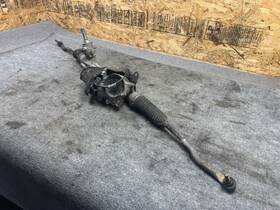
( Manufacturer Part Number: TA19-416171 ), ( Type: Rack Pinion ), ( Oe/oem Part Number: Tea-s0 ), ( Universal Fitment: No )
Review HONDA Type 2.0l Electric Power Steering Gear Rack Oem 93k fits CIVIC TOURING EPS 2019
The **Honda TA19-416171 Civic Touring 19 2.0L EPS Electric Power Steering Gear Rack** is a precision-engineered component designed exclusively for the 2019 Honda Civic Touring model equipped with a 2.0-liter engine and Honda s advanced Electric Power Steering (EPS) system. This steering gear rack is a critical part of the vehicle s handling and driver engagement, offering seamless, responsive, and effortless steering control while maintaining the Civic s sporty yet refined driving dynamics. Crafted from high-strength materials and built to Honda s exacting standards, this rack integrates a compact yet robust design that ensures durability, reliability, and optimal performance under various driving conditions. The EPS system, which replaces traditional hydraulic power steering, eliminates the need for a hydraulic pump and fluid lines, reducing complexity while enhancing efficiency and reducing maintenance requirements. The rack features a sleek, integrated motor and sensor assembly that provides real-time feedback to the vehicle s Electronic Control Unit (ECU), allowing for precise torque modulation and adaptive steering feel tailored to the driver s input and road conditions. Whether navigating tight city streets, cruising on highways, or tackling winding roads, this steering gear rack delivers a smooth, predictable, and engaging steering experience that aligns perfectly with the Civic Touring s reputation for balance between practicality and performance. Ideal for both original equipment replacement and aftermarket upgrades, this part is a direct-fit solution that ensures compatibility with the 2019 model year, maintaining the vehicle s factory-intended handling characteristics while offering long-term reliability. Its robust construction and Honda s commitment to quality make it a dependable choice for drivers seeking to restore or enhance their Civic s steering precision without compromising on performance or comfort.
### **Pros and Cons of Buying a 1999 Honda Civic Touring (TA19-416171, 2.0L EPS Gear Rack)**
#### **Pros**
1. **Reliability and Durability** Honda s 2.0L E-series engine (used in this model) is well-regarded for its longevity, especially when maintained properly. Many examples easily exceed 200,000 miles with basic upkeep.
2. **Electric Power Steering (EPS)** Unlike older hydraulic systems, EPS is generally more efficient and requires less maintenance. It also provides smoother, more responsive steering, which is a noticeable upgrade over manual or older hydraulic setups.
3. **Fuel Efficiency** The 2.0L engine in this Civic offers decent fuel economy, averaging around **24-28 MPG combined** (city/highway), which is reasonable for a car from that era.
4. **Comfortable Ride and Touring Features** The "Touring" trim level typically includes better sound insulation, a more refined suspension setup, and sometimes additional comfort features like power windows and locks.
5. **Resale Value** Honda Civics hold their value relatively well compared to many competitors, especially the more reliable models like this one.
6. **Affordability** Used cars from this era are generally budget-friendly, making them a practical choice for those on a tight budget.
7. **Simple Maintenance** Honda engines are straightforward to work on, and parts are widely available, reducing long-term repair costs if you re mechanically inclined.
8. **Good Handling** The Civic s compact size and balanced weight distribution make it nimble and enjoyable to drive, especially on winding roads.
---
#### **Cons**
1. **Age and Mileage Concerns** A 1999 model is now **25 years old**, meaning it may have accumulated significant wear. Without thorough maintenance records, hidden issues (e.g., timing belt, suspension, transmission) could arise.
2. **Potential Timing Belt Failure** The 2.0L E-series engine uses an **interference engine design**, meaning a failed timing belt can cause catastrophic engine damage. If the belt hasn t been replaced (typically every **60,000 100,000 miles**), this is a major risk.
3. **Transmission Issues** The automatic transmission (if equipped) in older Civics can wear out over time, leading to rough shifting or failure. A **pre-purchase inspection (PPI) is critical** to check fluid condition and transmission health.
4. **Rust Concerns** If the car has been driven in snowy or salted regions, rust in the wheel wells, undercarriage, or frame could be a problem. Rust can compromise structural integrity over time.
5. **Electrical System Reliability** Older Honda Civics can develop electrical gremlins, such as faulty sensors, wiring issues, or failing alternators. The EPS system, while an improvement, may still have occasional glitches if not properly maintained.
6. **Safety Standards** Modern safety features (e.g., stability control, advanced airbags, better crash structures) are absent. While the Civic is safe for its time, it doesn t meet today s collision safety benchmarks.
7. **Depreciation** Even reliable used cars lose value over time. If you plan to keep it long-term, depreciation means you ll spend more on repairs than you ll recover in resale value.
8. **Parts and Labor Costs** While parts are available, labor rates for repairs (especially on older models) can be higher than for newer cars. Some mechanics may charge a premium for working on pre-2000 vehicles.
9. **Resale Market Limitations** If you decide to sell later, finding a buyer may be harder compared to newer or more modern used cars.
10. **Environmental and Emissions Compliance** Some regions have stricter emissions regulations, and older cars may fail inspections or require modifications to remain street-legal.
---
### **Ending Conclusion**
The **1999 Honda Civic Touring (2.0L EPS)** is a **solid, reliable choice for budget-conscious buyers** who prioritize simplicity, fuel efficiency, and Honda s reputation for durability. The **EPS system is a welcome upgrade** over older models, and the engine is known for lasting well with proper care. However, **age-related risks** particularly the timing belt, transmission, and rust make it **essential to conduct a thorough inspection** before purchasing.
This car is **best suited for:**- Drivers who want a **low-cost, efficient daily commuter** with minimal maintenance needs.
- Those who **enjoy driving** and appreciate the Civic s handling and practicality.
- Buyers who **plan to keep it for a few years** and can afford potential repairs.
**It is less ideal for:**- Those who **prioritize modern safety features** or plan to keep the car long-term without budgeting for repairs.
- Buyers in **severe climates** (e.g., heavy snow/ice) where rust and winter wear could be issues.
- People who **don t want to deal with occasional electrical or mechanical quirks** common in older cars.
---
### **Recommendation**
**Buy it but with caution.**
1. **Get a Pre-Purchase Inspection (PPI)** from a trusted mechanic to check:- Timing belt and water pump condition.
- Transmission fluid and overall health.
- Suspension, steering, and brake systems.
- Rust in critical areas (frame, subframe, wheel wells).
- Electrical system (especially EPS and sensors).
2. **Verify maintenance history** If the belt, fluids, and filters have been regularly serviced, the risk of major issues drops significantly.
3. **Test drive thoroughly** Listen for unusual noises, check steering responsiveness, and ensure all electronics (windows, locks, EPS) work properly.
4. **Budget for potential repairs** Even a well-maintained Civic may need **$1,000 $3,000 in repairs** over the next few years, depending on condition.
5. **Consider alternatives if:**- You want **better safety** Look at a **2000 Honda Civic with stability control** or a **Toyota Corolla**.
- You need **lower long-term costs** A **2005 Honda Fit or Civic hybrid** (if available) may be more efficient and reliable.
- You prefer **modern tech** A **used 2010 compact car** with better electronics and safety.
**Final Verdict:**If you **find a well-documented, low-mileage example** (under **150,000 miles**) with a **clean PPI report**, this Civic can be a **great value**. However, if you re unsure about maintenance history or the car s condition, **consider a newer used model** for peace of mind. For the right buyer, it s a **practical, fun-to-drive car** that won t break the bank but it s not a "set-and-forget" purchase.
Details:
Declared values of each package are according to the actual value that.
part #: ta19416171 price
- $199.00
specifications steragebo:
- for models: Touring, Eps, Civic
- for makes: Honda
- for years: 2019
- mpn: Ta19-416171
- type: Rack Pinion
- oe/oem part number: Tea-s0
- universal fitment: No
payments steragebo:
- credit card: Diners-club
- other
- wallet: Google-pay
seller steragebo:
- rating: 99.9%
- # reviews: 1912
- city: Rancho Cordova, California
returns steragebo:
- paid by: Buyer
- policy: Returns Accepted
- time: 30 Days
offer steragebo:
- sold: 0
- started: May 6, 2026
- quantity: 1
- availability: In Stock
- options: Ship-to-home
general steragebo:
- Car Truck Parts Accessories > Steering Suspension > Gearboxes, Rack Pinions
- condition: Used
shipping steragebo:
- service: UPS Ground
- transit: 3-8 Days
- class: Standard
- carrier: UPS
- type: Fixed
- cost: $85.00
Honda TA19-416171 Is Similar To:
- 03 Honda Civic Steering Gear-rack (44.8% similar) No expedited shipping is available. If an item arrives damaged, please via message or by phone at within 24 hours for instructions...(August 7th, 2017)
- 06351tx6a11 Honda Acura Oem Lock Cylinder (24.1% similar) Is the only way to be certain. Is provided through M2M messages, the order will cancel. All airbag modules are also non returnable. Est, Mon to Fri...(May 1st, 2018)
- 06532s50003 Honda Oem Steering (26.2% similar) ...(April 2nd, 2019)
- 06536ta5505rm Honda Oem 11-12 Accord Steering (35% similar) Superseded part numbers this item may have been from a different number manufacture...(February 16th, 2017)
- 103-2909 Beck Arnley For Honda Civic Center Rack Pinion 049797735719 (32.5% similar) Beginning with motorcycle parts in 1914 and transitioning to import vehicles the, brand understands deliver oe quality that matches what was originally on vehicle. Rack and pinion bellow kit by beck anally. Beginning with motorcycle parts in 1914 and transitioning to import vehicles the 1950 , brand...(July 6th, 2018)
- 16h0869 Honda Civic Steering Gear-box Power (40% similar) 4l Si this listing is for a used factory oem steering gear box rack and pinion images are reference purposes only. Honda civic steering gear box power rack and pinion electric model: 2012 year: stock number: 16H0869 odometer: 40990 miles part comments: 3/1 2,1...(March 2nd, 2017)
- 19730045848 Honda Insight Power Steering Gear Box Grommet Oem (44.4% similar) Kindly ask questions before offer ends. No exception. Free shipping is within the continental us...(May 25th, 2018)
- 26-1755 Cardone Industries Rack And Pinion Complete Unit Reman Fits Honda (26.7% similar) Part: 26-1755 prices...(September 23rd, 2018)
- 348525 Gates Rack And Pinion Seal Kit Fits Honda Civic (16.4% similar) On the right side of screen item you bought 'more actions...(May 23rd, 2018)
- 348561 Gates Rack And Pinion Seal Kit Fits Honda Accord (17.7% similar) This part fits vehicles made in the following years 2003 , 2004 , 2005 , 2006 , 2007...(April 2nd, 2018)
- 348960 Gates Rack And Pinion Seal Kit Fits Honda Prelude (17.6% similar) This part fits vehicles made in the following years 1992 , 1993 , 1994 , 1995 , to 7 PO. Rack and pinion seal kit fits honda prelude gates price is for 1 - adjust qty as needed...(September 5th, 2018)